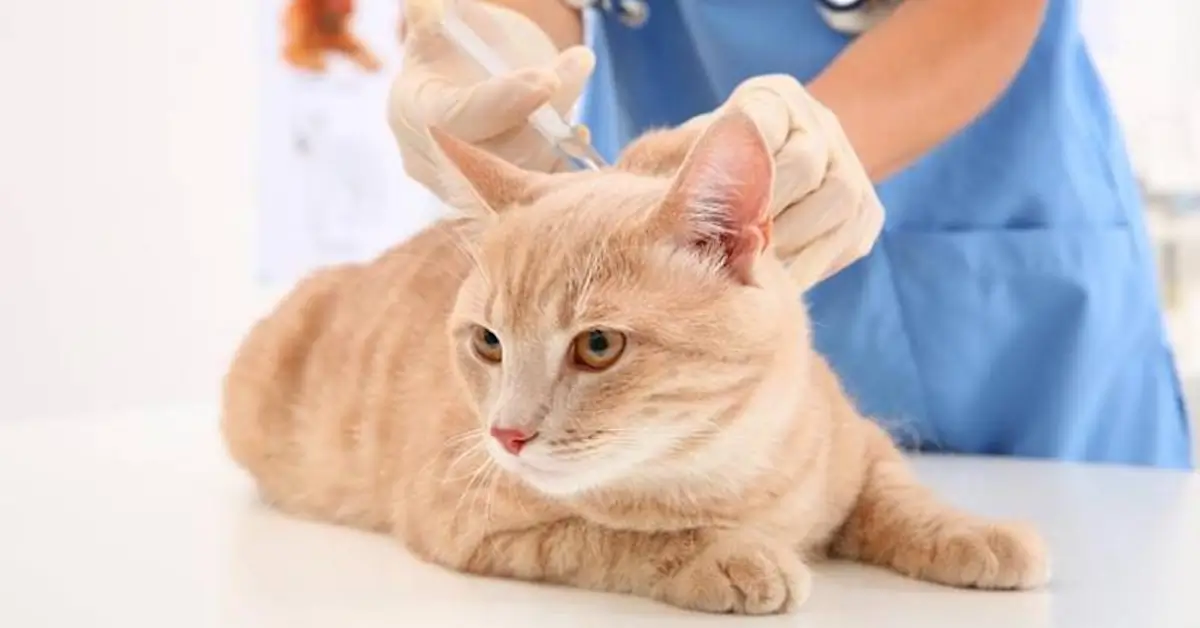
If you’re wondering whether your cat really needs vaccines, the answer for most cats is yes—even indoor cats. Vaccines help protect against serious illnesses, and they also protect the people around your cat (especially for rabies).
This guide walks you through where to start, what vaccines are usually recommended, and what to expect at your first vet visit—without overwhelming you.
Should my cat be vaccinated?
In most households, vaccination is a good idea because it lowers your cat’s risk of catching contagious diseases that can be severe, costly to treat, or even fatal.
Even indoor cats can be exposed through:
- new cats entering the home (rescues, fosters, boarding)
- visitors who have pets
- shared hallways, elevators, or balconies in condos/apartments
- vet visits or grooming trips
If you’re caring for community cats or your cat goes outdoors, vaccination becomes even more important because exposure risk is much higher.
What vaccines are usually recommended for cats?
Many vets start with core vaccines, which are commonly recommended for most cats because the diseases are widespread and can be serious.
Core vaccines often include:
- FVRCP combo (this commonly covers feline viral rhinotracheitis/herpesvirus, calicivirus, and panleukopenia)
- Rabies vaccine
Some cats may be advised to get additional (non-core) vaccines depending on lifestyle and risk, such as cats that go outdoors, live with many cats, or have unknown backgrounds. Your vet may recommend tests first (especially for rescued cats) before deciding what else is needed.
When should kittens and adult cats get vaccinated?
Vaccines are usually given as a series, not a one-time shot.
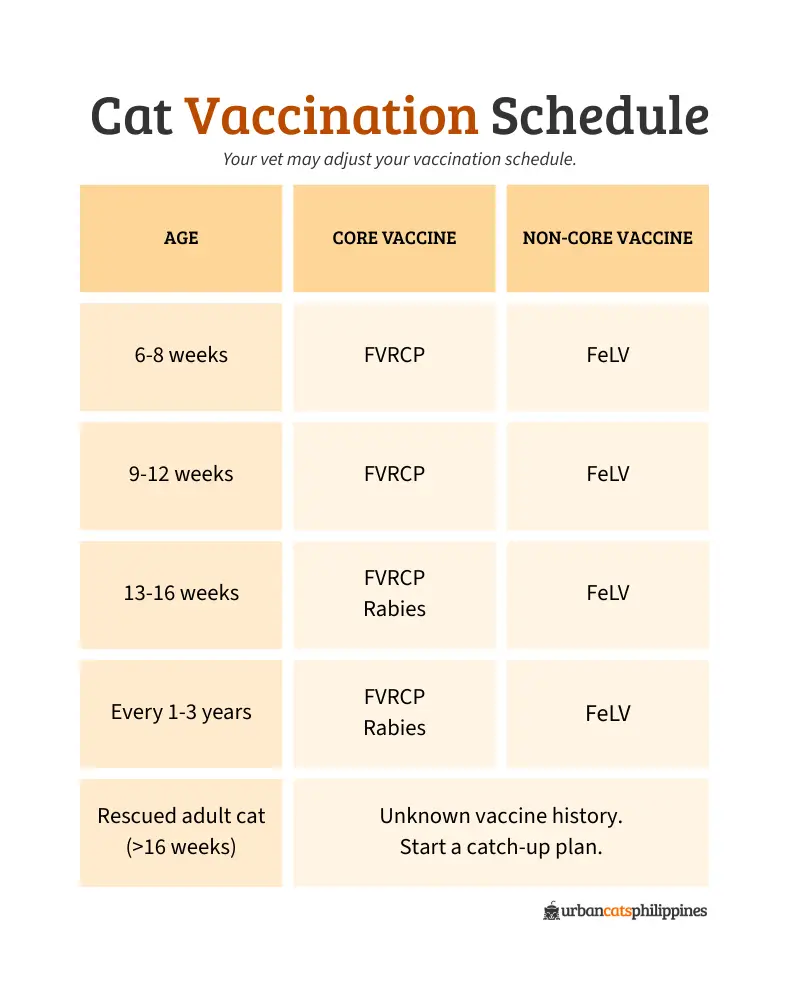
For many kittens, the first vaccines often start at around 6–8 weeks old, then continue every 3–4 weeks until around 16 weeks. Rabies is commonly given when kittens are a bit older, based on the clinic’s protocol and your cat’s age and health.
For adult cats with unknown vaccine history (common with rescues), vets often treat them as unvaccinated and start a catch-up plan.
After the initial series, many cats need booster shots later to keep protection strong. The exact timing depends on your cat’s age, health, vaccine type, and lifestyle, so it’s best to follow the schedule your vet writes in your cat’s record.
Where can I get my cat vaccinated in the Philippines?
You can usually get cat vaccines from:
- private veterinary clinics and animal hospitals
- some pet clinics inside pet stores (availability varies)
- city/municipal veterinary offices or barangay/LGU vaccination drives (often focused on anti-rabies)
If budget is tight, it’s worth checking with your city vet or LGU announcements, since some areas offer free or low-cost anti-rabies vaccination events.
What should I prepare before vaccination day?
A smoother visit helps both you and your cat.
Before you go:
- Use a carrier (avoid carrying your cat in your arms or in a bag without ventilation).
- Put a towel or familiar blanket inside the carrier.
- Bring any previous records (even photos of a vaccine card help).
- If your cat is newly rescued, share what you know: appetite, poop, energy, cough/sneeze, or possible parasite issues.
On the day:
- Stay calm and speak softly.
- Try not to feed a very large meal right before the visit (some cats get motion sickness), but don’t force fasting unless your vet instructed it.
Your vet will usually do a quick check to make sure your cat looks well enough for vaccination.
What reactions are normal, and when should I contact the vet?
Many cats do fine after vaccines. Mild reactions can happen and may include:
- sleepiness for a day
- mild soreness where the shot was given
- slightly lower appetite for a short time
Contact your vet urgently if you notice signs that seem more serious, such as:
- repeated vomiting or diarrhea
- facial swelling, widespread hives, or intense itching
- trouble breathing
- collapse or extreme weakness
- swelling at the injection site that grows, becomes painful, or doesn’t improve over time
If you’re unsure, it’s okay to call the clinic and describe what you’re seeing.
How much do cat vaccines usually cost in the Philippines?
Costs vary by city and clinic, and prices can change over time.
As a rough guide, many cat vaccines are priced from a few hundred to over a thousand pesos per shot, and the full kitten series can cost a few thousand pesos total across multiple visits. Clinics may also charge an exam fee, especially for first-time patients.
If you’re vaccinating multiple cats (like a small rescue situation), ask clinics if they have packages or multi-cat discounts, and check LGU anti-rabies drives when available.
Conclusion
For most cats in the Philippines, vaccination is a practical step toward a healthier, safer life—especially for core protection like FVRCP and rabies. Start with a vet visit, follow the recommended schedule, and keep a simple record of dates so boosters don’t get missed. If you’re caring for rescued or community cats, a vet can help you build a plan that fits real-world risks and your budget.
If you’re building a complete responsible-care checklist, consider reading our related guide on spay and neuter next.
References
- Hunter, T., Williams, K., & Downing, R. (n.d.). Indoor Cats and Infectious Disease. VCA Animal Hospitals. https://vcahospitals.com/know-your-pet/indoor-cats-and-infectious-disease
- American Animal Hospital Association (AAHA). (2020). Core Vaccines for Pet Cats. https://www.aaha.org/resources/2020-aahaaafp-feline-vaccination-guidelines/core-vaccines-for-pet-cats/
- Stone, A. E. S., Brummet, G. O., Carozza, E. M., Kass, P. H., Petersen, E. P., Sykes, J., & Westman, M. E. (2020). 2020 AAHA/AAFP Feline Vaccination Guidelines. American Animal Hospital Association (AAHA). https://www.aaha.org/wp-content/uploads/globalassets/02-guidelines/feline-vaccination-guidlines/resource-center/2020-aahaa-afp-feline-vaccination-guidelines.pdf
- Egberink, H. (2025). GUIDELINE for Adverse reactions to vaccination. ABCD Europe. https://www.abcdcatsvets.org/guideline-for-adverse-reactions-to-vaccination/