If you’ve ever worried about your cat slipping out the door, getting spooked during a move, or escaping a carrier at the vet, microchipping can give you an extra layer of protection. A microchip doesn’t track your cat like a GPS, but it can help prove ownership and help clinics and shelters contact you if your cat is found.
This guide explains who should consider microchipping, what to expect, and how to get started in the Philippines.
Should my cat be microchipped?
Microchipping is a practical choice for many cats because it provides a permanent ID that can’t fall off like a collar tag. It may be especially worth considering if your cat:
- has access to hallways, rooftops, balconies, or shared outdoor spaces
- lives in a condo/apartment where doors open often (deliveries, visitors, kids)
- travels (moving homes, long trips, vet visits that require carriers)
- is a former stray or rescued cat that may try to “go back” to familiar areas
Even for indoor-only cats, accidents happen—cats can dash out when a door opens or during emergencies like evacuations. A microchip can improve the chance that the right person can contact you if your cat is brought to a clinic or shelter.
Microchipping works best when paired with everyday safety: secure screens, safe carriers, and supervised outdoor time only if it’s truly controlled.
What exactly is a microchip and what does it do?
A pet microchip is a tiny device (often described as about the size of a grain of rice) implanted under your cat’s skin. It has no battery.
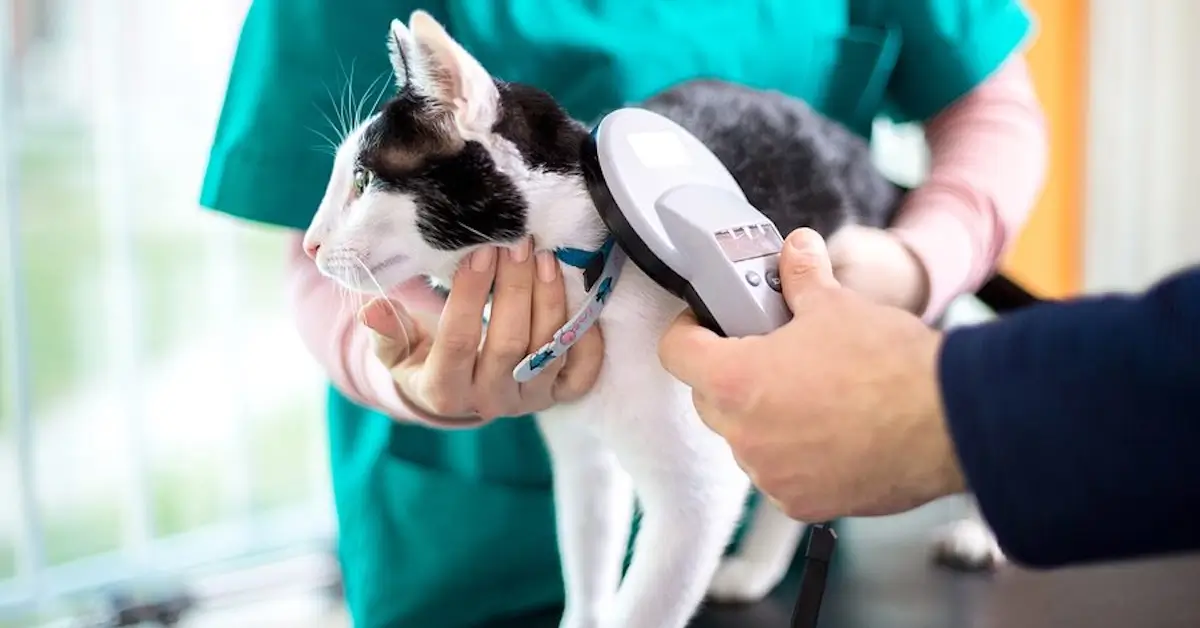
When a vet clinic or shelter scans the area with a microchip scanner, the chip transmits a unique ID number. That number is meant to match a record in a microchip registry or database that contains your contact details.
A key point: a standard microchip is not GPS. It won’t show your cat’s live location on a phone map. Think of it as a permanent “ID number,” not a tracker.
Is microchipping safe, and what is the procedure like?
For most cats, microchipping is generally considered safe when done by a licensed veterinarian or trained professional. The procedure is quick and feels similar to an injection.
In many cases, the chip is placed under the skin between the shoulder blades. Some cats may yelp or flinch, and a few may be a bit sore afterward, but most return to normal quickly.
Complications can happen but are uncommon. If your cat has swelling, persistent pain, bleeding, or seems unwell after the procedure, contact your veterinarian for advice.
This article is for general education and isn’t a substitute for veterinary guidance for your individual cat.
When is a good time to microchip a kitten or adult cat?
Many kittens can be microchipped when they’re old enough and healthy enough for the procedure, and some clinics commonly offer it around routine visits like vaccinations. Adult cats can also be microchipped at any time, as long as they’re stable and well enough for a quick procedure.
If your cat is scheduled for spay/neuter, some owners ask about doing the microchip during that visit for convenience. Your veterinarian can help you choose the best timing based on your cat’s size, health, and stress level.
How much does cat microchipping usually cost in the Philippines?
In the Philippines, microchipping fees are often described as a typical range of around ₱500 to ₱1,500, but costs vary by clinic, city, and whether registration is included.
Some local government units (LGUs) and animal welfare groups may occasionally offer low-cost or free microchipping events, sometimes alongside rabies vaccination or spay/neuter programs. Availability depends on your area and schedule, so it’s worth checking your city or municipal veterinary office announcements.
Price matters, but value matters too—make sure the chip is properly registered and your contact information is correct.
How do I start microchipping my cat in the Philippines?
The best place to start is a veterinary clinic you trust, or your city/municipal vet office if they offer microchipping programs. Before you go, it helps to know what “good microchipping” looks like: proper implantation, proper documentation, and proper registration.
Here’s a simple checklist to guide you:
- Book an appointment (or confirm event details). Ask if microchipping is available and what’s included in the fee.
- Ask what type of chip they use and how it’s registered. You can ask if it’s “ISO-compliant” and where your details will be stored.
- Get the microchip number in writing. Keep a photo of the sticker/record in your phone and a copy in your cat’s folder.
- Register the microchip immediately (if needed). Some clinics help with this; others will give instructions.
- Keep your contact details updated. If you move, change phone numbers, or change email, update the registry right away.
After microchipping, it’s still helpful for your cat to wear a breakaway collar with an ID tag (if your cat tolerates it safely). That gives a finder a way to contact you even before a vet scan happens.
What mistakes should I avoid?
Microchipping is only as useful as the information connected to it. These are common issues that can reduce its value:
- Not registering the chip at all. A chip with no record can’t point back to you.
- Outdated contact information. Old numbers and emails can block a reunion.
- Assuming it’s a GPS tracker. A microchip helps with identification after scanning, not live tracking.
- Relying on it to store full medical records. Many systems use the chip as an ID number, while records are stored elsewhere.
- Skipping basic safety because “my cat is chipped.” Window screens, secure carriers, and indoor safety still matter.
If you adopted a cat that was already microchipped, ask a vet clinic to scan your cat and help you confirm where the chip is registered so you can update the owner details.
Conclusion
Microchipping can be a smart, low-effort step to help your cat get back to you if they’re ever lost—especially in busy urban areas where doors open often and cats can slip out fast. It’s not GPS, but it can provide permanent identification and proof of ownership when a clinic or shelter scans your cat.
If you’re planning to microchip, focus on three things: have it done by a reputable clinic or trained provider, make sure the chip is registered, and keep your contact details updated. And if you’re building a “responsible ownership” checklist, pairing microchipping with spay/neuter is a humane way to reduce roaming and prevent unwanted litters.
Next, read Cat Deworming in the Philippines to plan the next big step in lifelong, responsible cat care.
References
- American Veterinary Medical Association (AVMA). (n.d.). Microchipping FAQ. https://www.avma.org/resources-tools/pet-owners/petcare/microchips-reunite-pets-families/microchipping-faq
- American Animal Hospital Association (AAHA). (2024). The Priceless Benefits of Microchipping Your Pet. https://www.aaha.org/resources/the-priceless-benefits-of-microchipping-your-pet/
- World Small Animal Veterinary Association (WSAVA). (n.d.). Microchip Identification Guidelines. https://wsava.org/global-guidelines/microchip-identification-guidelines/