
If you’re wondering whether your cat needs deworming, you’re not alone—especially if you’ve just adopted a kitten, rescued a puspin, or noticed tummy issues. Worms are common in cats, and many cats don’t look obviously “sick” at first. The good news is: deworming is a normal, routine part of responsible cat care, and starting is usually simple.
Does my cat need to be dewormed?
Many cats in the Philippines may be exposed to worms at some point—especially kittens, newly rescued cats, and cats with flea problems. Deworming is commonly recommended for:
- Kittens and young cats, because they can pick up worms early in life.
- Rescued or newly adopted cats, because their parasite history is often unknown.
- Cats that go outdoors, hunt, or have contact with other animals.
- Cats with fleas, because fleas can be linked to certain tapeworm infections.
Even indoor-only cats may still be advised to deworm on a schedule, since parasite eggs can be tracked in on shoes, brought in by other pets, or picked up from shared environments.
What is deworming and what worms are common in cats?
Deworming means giving a vet-recommended medicine that helps remove internal parasites (worms) from the body. In cats, the most commonly discussed intestinal worms include roundworms and tapeworms.
Worms can irritate the gut and may affect growth and nutrition, especially in kittens. In adult cats, worms may cause milder signs—or no obvious signs at all—so prevention and routine care matter.
Can deworming treat fleas?
No. Deworming treats internal parasites (worms), not fleas.
But fleas still matter because cats can pick up certain tapeworms by swallowing fleas while grooming.
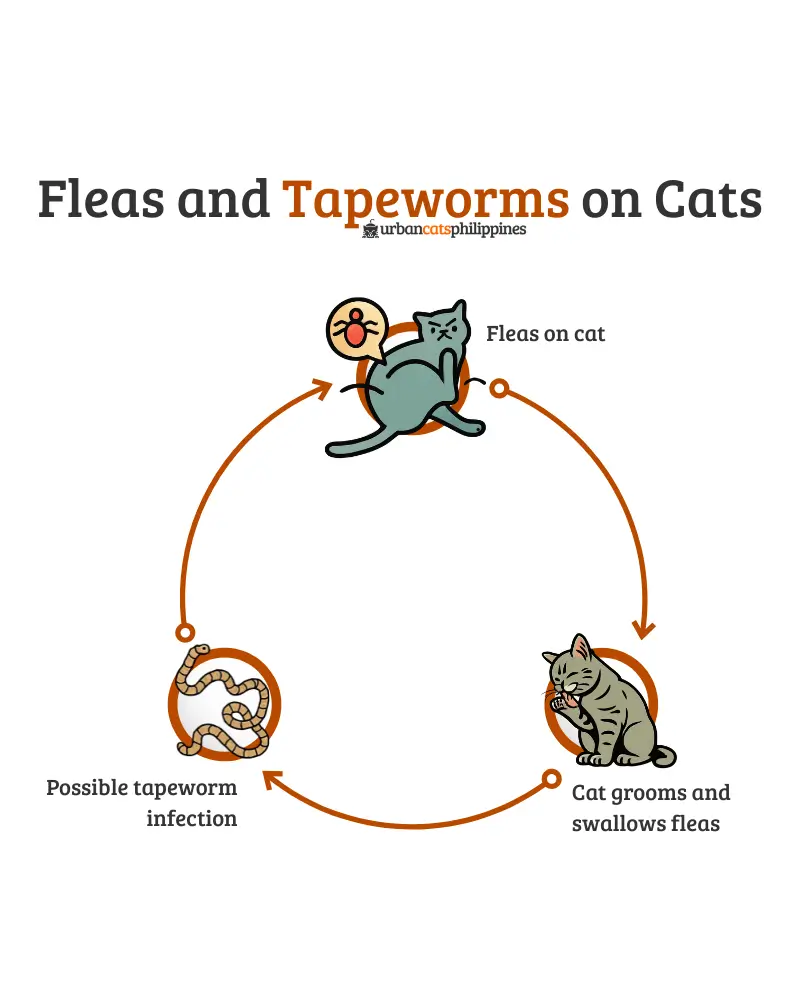
So if your cat has fleas, your vet may recommend handling both issues: deworming for worms, and a separate flea-control plan to prevent reinfection.
If your cat is a young kitten, pregnant, nursing, or sick, don’t guess with flea products—ask a veterinarian what’s safe for your cat’s age and weight.
Can cat worms affect people in the household?
Some cat parasites can affect humans, and children may be at higher risk because they’re more likely to play on the floor, touch soil, or forget handwashing. This sounds scary, but it doesn’t mean you can’t safely have cats at home.
Simple habits make a big difference: clean the litter box daily, wash hands after scooping or gardening, keep kids from playing in areas where cats poop, and bring your cat for routine vet care. Regular parasite prevention is a practical way to protect both your cat and your household.
What signs might suggest worms?
Some cats with worms may have signs like:
- A pot-bellied look in kittens, or poor growth.
- Soft stool, diarrhea, vomiting, or changes in appetite.
- Weight loss or a “thin” look despite eating.
- Dull coat or low energy.
- Rice-like white bits near the anus or stuck on fur (often linked with tapeworm segments).
Not all cats show clear signs, so it’s possible for a cat to have worms without obvious symptoms. That’s one reason vets often recommend routine deworming for kittens and risk-based deworming for adults.
When should kittens and adult cats be dewormed?
Your vet may adjust the schedule based on your cat’s situation, but many clinics follow a routine like this:
- Kittens: often dewormed every 2 weeks during early kittenhood, then monthly until about 6 months old.
- Adult cats: commonly dewormed on a regular schedule, with frequency depending on whether your cat is strictly indoors or has outdoor exposure.
Here’s a simple example schedule many pet owners are told to follow:
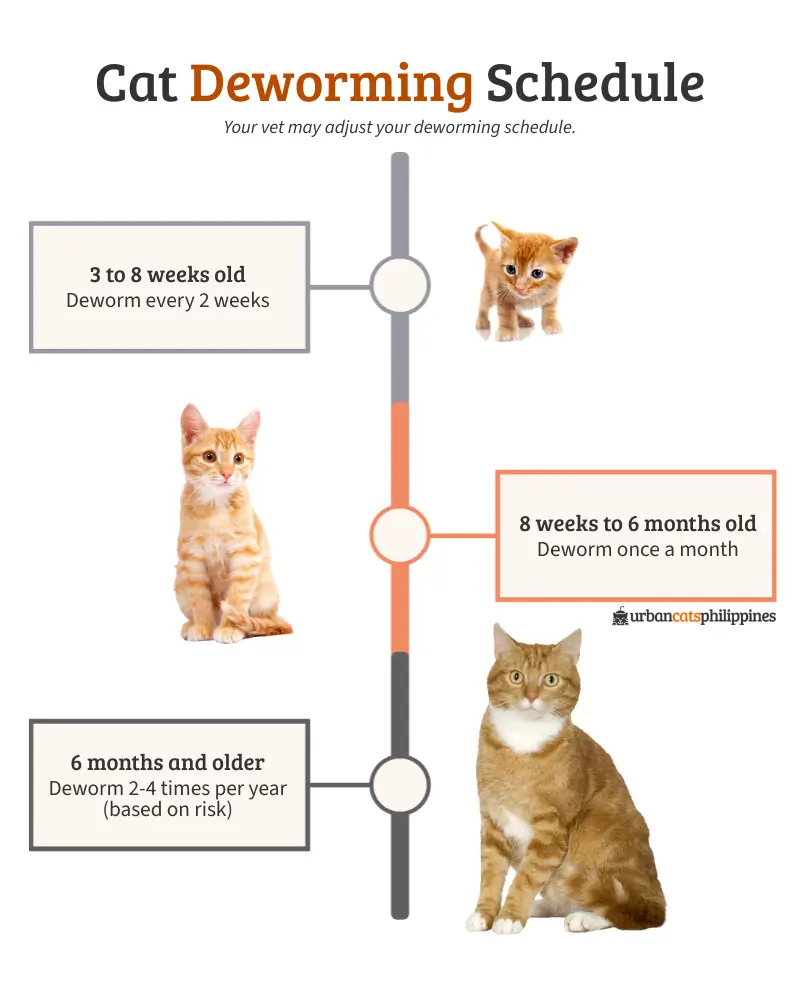
If your cat has diarrhea, vomiting, weight loss, visible worms, heavy flea exposure, or was recently rescued from the street, ask your vet if a stool test (fecal exam) is needed and whether your cat needs a tighter schedule at the start.
Where can I get my cat dewormed in the Philippines?
A veterinarian clinic is the safest place to start, especially for kittens, newly rescued cats, and cats with symptoms. A vet can:
- Check your cat’s overall health and weight.
- Recommend the right deworming plan for your cat’s age and lifestyle.
- Advise if a fecal exam is useful.
- Guide you on flea control if it’s part of the problem.
If you’re caring for community cats, you can also look for low-cost clinics and outreach programs in your city. Even one vet visit can help you set a safer routine for future care.
How much does deworming typically cost?
Costs vary by clinic, city, and whether your cat needs an exam, a fecal test, or treatment for fleas at the same time. As a rough guide, you may see:
- Deworming medicine: often priced per dose, commonly in the low hundreds of pesos for many cats.
- Consultation fees: may range from a few hundred pesos depending on the clinic.
- Additional services (like fecal testing): may add to the total.
If budget is tight, ask clinics about low-cost schedules, rescue rates, or community programs. Many vets will help you prioritize what matters most first.
Conclusion
Most cats benefit from a deworming plan—especially kittens, newly adopted or rescued cats, and cats with flea exposure or outdoor access. Because worms aren’t always obvious, a vet-guided schedule is often the simplest way to protect your cat’s health and reduce risk for your household. Start with a clinic visit, follow an age-appropriate routine, and pair deworming with good litter hygiene and (when needed) safe flea control.
If you’re building a basic health routine for a new cat, read our beginner-friendly guide on cat vaccination next.
References
- Weir, M., & Ward, E. (n.d.). Tapeworm infection in cats. VCA Animal Hospitals. https://vcahospitals.com/know-your-pet/tapeworm-infection-in-cats
- Roman, M. (2025). Parasites in Cats. Merck Veterinary Manual. https://www.merckvetmanual.com/cat-owners/caring-for-cats/parasites-in-cats
- Peregrine, A. S. (2024). Tapeworms in Dogs and Cats. MSD Veterinary Manual. https://www.msdvetmanual.com/digestive-system/gastrointestinal-parasites-of-small-animals/tapeworms-in-dogs-and-cats
- Barnes, C., Williams, K., & Ward, E. (n.d.). Zoonotic Diseases in Cats. VCA Animal Hospitals. https://vcahospitals.com/know-your-pet/zoonotic-diseases-in-cats
- European Scientific Counsel Companion Animal Parasites (ESCCAP). (n.d.). Scheme for individual worm management in cats. https://www.esccap.org/uploads/docs/8obbw02h_0778_ESCCAP_GL1__Worm_Management_Scheme_Fact_Sheet__Cats_v7.pdf